
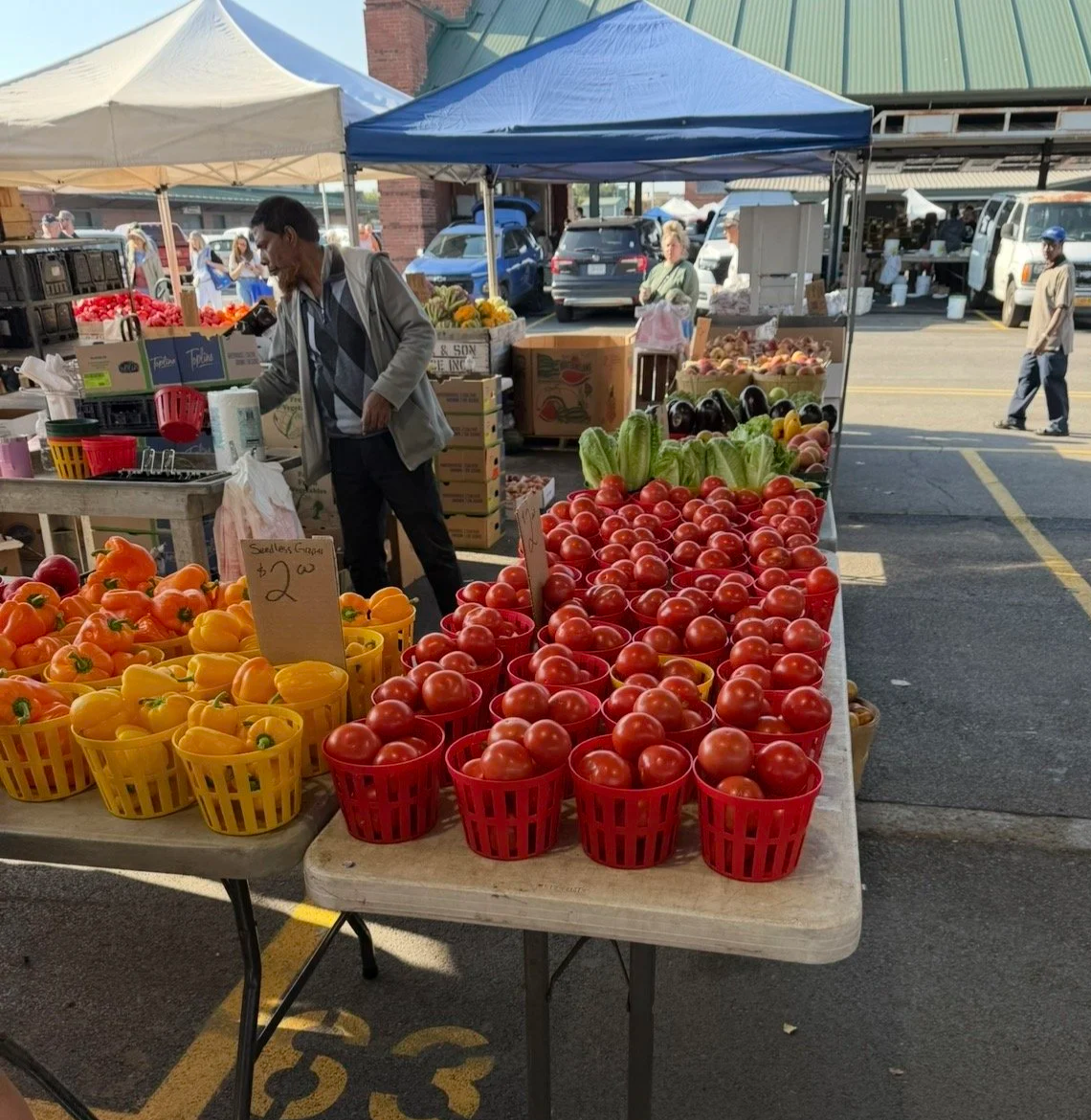
A vendor sells produce at the CNY Regional Market in Syracuse, New York.
Inflation has changed the way many of us think about everyday spending. From grocery shopping and household necessities to dining out and transportation, expenses that once felt manageable can quickly become a larger part of the monthly budget. But finding ways to save money doesn't mean sacrificing the experiences that make life enjoyable.
As someone living in a two-person household, I've found that managing rising costs is often about finding a better balance between spending, saving, and maintaining a comfortable lifestyle. Whether it's being more intentional about grocery shopping, finding affordable ways to enjoy dining out, or making small adjustments to transportation habits, there are opportunities to make your money go further. Here are four practical approaches that have worked for me.
Household Goods: Making Everyday Spending Go Further
Let’s start with the household. When household expenses are on the rise, even the simplest shopping trips can start to feel overwhelming. The good news is that spending less money doesn’t mean you have to sacrifice quality or convenience. Sometimes, it’s simply about finding a little more value in the things you already purchase.
Start by comparing prices between name-brand and store-brand products. Many everyday essentials, including cleaning supplies, toiletries, and pantry staples, offer comparable quality at a lower price. Buying frequently used items in larger quantities can also help, provided you’re purchasing things you genuinely need, and provided that you have the funds up front because buying in bigger quantities usually means the price is higher by a couple of dollars. If you have some flexibility you could find that store brand products can have some similar qualities to name brand based on the type of product you’re using.
Another helpful approach is planning your grocery shopping around meals for the week. Taking a few minutes to check what you already have, create a shopping list, and plan meals can help reduce food waste and unnecessary purchases. These small adjustments may not seem significant individually, but over time, they can make a real difference in your household budget. One thing I do is purchase items like veggies from the frozen section. I mix these in when I cook and this helps me to save from veggie waste, and it’s great to still have meals packed with vegetables. Local farmer’s markets are also a great place to find affordable foods. If you live near a local farmer’s market, you’ll find that you can buy great quality foods at slightly more affordable prices than the big name grocery stores. It’s also a great way to help a small business owner. I tend to buy eggs, potatoes, tomatoes, and other good stuff at local farmer’s markets.
Dining Out: Enjoying Life Without Overspending
One of the things that makes life enjoyable is being able to get out of the house, discover a new restaurant, or enjoy a meal with someone you care about. That’s largely where I spend my money as a person who writes about dining out. It should be noted that I am always trying to save a few bucks when I can. When budgets become tighter in the household, dining out is often one of the first things people feel they need to eliminate. But it doesn’t have to always be that way. We do need to find time to make our days enjoyable too.
For a two-person household, setting aside a dedicated monthly dining budget can help make eating out more manageable. I like to keep a separate account for spending funds. This helps me to ensure I don’t spend money that is prioritized for bills on expenses like dining out. I’ve shared a link to a SoFi account below which has helped me keep costs separated, and I don’t get monthly banking fees for holding an account either.
Enjoying a couple of meals outwith a partner each week or mixing affordable lunches with an occasional nicer dinner shouldn’t feel impossible, but having funds set aside allows you to enjoy those experiences without worrying about every dollar spent.
Look for weekday specials, happy hours are a great way to save some bucks, and you will find that local neighborhood restaurants offering good value, depending on what you order costs are sometimes the same as more expensive seeming restaurants. You might even discover a new favorite place along the way.
One thing my partner and I do is share meals. Entrees can be large, so often times we share an entree and an appetizer or a salad. This keeps us from buying two full priced entrees and being left with a ton of leftovers that might go to waste if we don’t get back to them on time. It also leads to a somewhat smaller bill. One thing to keep in mind is the cost of taxes and tip when eating out. I always try to consider what the cost might be and add about 28-30% to the price to account for taxes and tip which we often forget about when we’re creating a budget. Think about it this way, if you’re dining out, a $30 meal can easily become a $39 meal after taxes and tip, that $9 doesn’t always come to mind. If I’m grabbing lunches at any point during the week, I keep this in mind or try to frequent places where I know a tip isn’t going to exceed my budget like a local pizza shop for a slice or a deli sandwich.
What should be noted is that managing your finances shouldn’t mean giving up the experiences that bring you happiness. It’s about finding ways to enjoy them while staying comfortable with what you spend.
Gradual Savings: Making Small Decisions Work Together
Building savings can sometimes feel like an uphill battle, particularly when so much of your income is already committed to everyday expenses. But you don’t need to put away hundreds of dollars every month to begin making progress. What matters most is establishing a habit that works for your household.
Start by reviewing recurring monthly expenses, including streaming subscriptions, insurance, phone plans, and memberships. I actually closed accounts on Netflix, and MAX to reduce costs, now I’m just on Hulu. You may find opportunities to reduce costs simply by comparing providers or eliminating services you rarely use like I did. Even modest savings across several categories can add up over the course of a year.
Another opportunity is making your everyday banking work for you. One thing I've found helpful is keeping my savings separate from my everyday spending. I've personally used SoFi Checking and Savings as a way to set money aside and create a little more financial discipline. If you're considering opening an account, you can also explore my referral offer, which provides an opportunity to earn up to $375 in combined promotional bonuses for eligible new customers. The maximum offer requires meeting additional conditions, including maintaining qualifying balances and enrolling in SoFi Plus. There is no cost to keeping an account open, and this has been a way I keep my savings account separate from my spending account. They also don’t charge you to move money from savings when you’re in a pinch. SoFi has been a great way for me to manage my expenses, savings, and to keep an entirely different spending account away from my savings account.
Full Disclaimer I do get a referral bonus too if you sign up, so it’s a win-win for both of us. This is a plug, but honestly it is one that has worked wonders for me over the years, so it’s less about sharing a link, and more about getting you connected with a resource. I’ll post the referral code below.
Use my SoFi link, and we both get the cash bonuses: https://www.sofi.com/invite/money?gcp=67023aae-841d-4bd0-8029-8d0e8df4864e&isAliasGcp=false&siid=156efa2c-ff37-474b-9fb3-bcbc91edf0a9
Finally, consider automating a manageable transfer into savings every time you get paid. It doesn’t have to be much, and you will see that in time a little can go a long way. I was able to save up to $6000 putting in $100 a month in five years. The important thing that I did was open my savings account in a separate bank like SoFi and I left the funds there, and I kept my debit card for this bank account at home to ensure that I never used those savings. Treating savings like another category of bills can help you build an emergency fund gradually, and create a little more financial breathing room later down the road. It’s not a problem solver, but know that small investments can build larger rewards, it just takes time.
Rethinking Transportation: Small Changes, Meaningful Savings
Transportation is another area where small adjustments can make a meaningful difference. Between rising gas prices, parking fees, and vehicle maintenance, getting around town can become an expensive part of everyday life. If it’s practical for you, safe, and if you’re able to in your neighborhood consider walking a couple of times a week, particularly for nearby errands, coffee runs, or trips to the grocery store. Even if you have to drive to a set location, consider if you can park in one place and walk between shops rather than driving across to different places. This will save you gas over the span of a month, not much but a little can go a long way in the span of a year.
I currently reside in Rochester, New York which is a smaller city. What I like is that there are many places to grab my household goods in walking distance, so I spend alot of time on foot. Growing up in Los Angeles I drove everywhere, here I drive roughly 2 times a week now which translates to about $20 on gas every month. I save about $1,500 annually by spending more time on foot. It can be a simple and healthy way to save on gas while getting some fresh air along the way. Of course, it’s not practical for all, so do what makes sense for you.
For some medium trips, I also use local bus services which can be another more affordable alternative to driving. I pay about $1 per trip, and typically use it on lines that take about 20 minutes to my destination. I did not give up the convenience of my car entirely, but I pick and choose times to use public transit especially when I have extra time to spend, and don’t want to worry about the hassle of parking or paying for parking. Even replacing a handful of weekly trips can help stretch your household budget.
Final Thoughts On Finding Your Balance
Navigating a higher cost of living isn’t always easy, and it’s important to remember that you don’t have to change everything overnight. Financial progress often comes from small decisions that gradually become lasting habits. Whether it’s finding better value at the grocery store, enjoying a meal out without overspending, or putting a little extra into savings, every effort counts. The goal isn’t to stop enjoying life, but to feel more confident about the choices you make and build a household budget that works for you. If you’ve enjoyed this read, please be sure to follow the Underrated Guide on social media, share this post, or subscribe to the guide.
